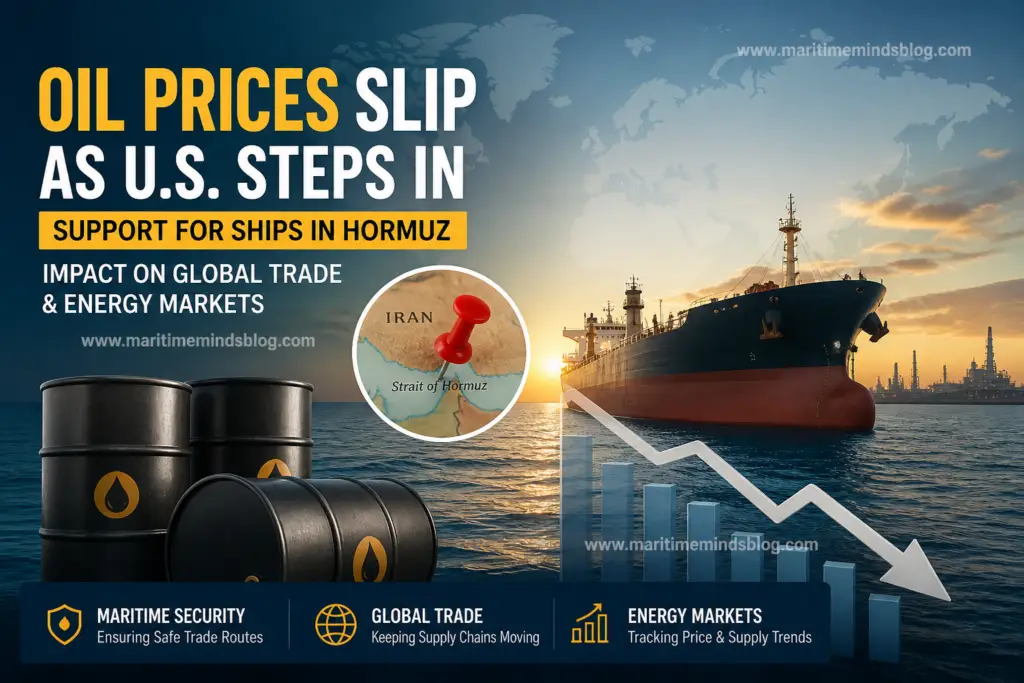
Oil Prices Fall After U.S. Support in Strait of Hormuz | Maritime Impact & Global Trade

Oil prices slipped after U.S. signaled support for stranded ships in the Strait of Hormuz. Explore the impact on global trade, shipping industry, and energy markets amid geopolitical tensions.

This move signals a potential de-escalation in maritime disruption, bringing temporary relief to energy markets and global trade flows.

 What Triggered the Price Drop?
  1. U.S. assurance to support and escort stranded commercial vessels
  2. Reduced fear of prolonged supply blockage
  3. Market expectation of partial normalization of oil flows

 Result: Oil prices softened after recent spikes

 Immediate Maritime Impact
  1. Increased confidence among tanker operators
  2. Potential resumption of stalled voyages
  3. Slight easing in war-risk insurance premiums (short-term)
  4. Improved vessel movement in high-risk zones

 A critical step toward restoring shipping confidence

Energy Market Reaction
  1. Brent crude shows price correction after surge
  2. Traders factoring in reduced supply disruption risk
  3. LNG and refined product markets may stabilize gradually

 But volatility is far from over

 Strategic Implications
  1. U.S. intervention reinforces its role in securing global trade routes
  2. Hormuz remains a geopolitical pressure point
  3. Any escalation could quickly reverse current relief

 Markets are reacting to signals—not certainty

Industry Insight

This development highlights a key reality:

 Maritime security directly drives oil price stability
 Even a single announcement can move global markets

For shipping and energy players, this means:

  1. Constant monitoring of geopolitical signals
  2. Agile routing and chartering strategies
  3. Risk-based decision-making
Deep Dive Analysis

Let’s Discuss

Do you think U.S. intervention will bring lasting stability—or is this just temporary relief?

How is your organization managing risk in high-tension maritime zones?